Thursday, September 27, 2012

French Immersion in Peel Region - Plus ça change

The Peel District School board in Ontario has made headlines this week for an all-too-familiar Canadian problem: burgeoning enrollment in French immersion, and limited capacity to accommodate the student demand.  Sadly, the board has resulted to a tried-and-failed approach to dealing with this problem - using a lottery system to determine which students will be admitted to the program.  Today, the Globe and Mail has dedicated one of its editorials to criticizing this short-sighted policy.

It is an all-too-familiar problem in this country, and one which you'd think we might have solved by now.  French immersion has been around longer than I have, and yet the current situation faced by the Peel board has been repeated in province after province, board after board, over the past 40 years.  Lotteries, line-ups and other limited access solutions have caused outrage and problems in community after community.  Indeed, I've published an article on how a similar situation in Sackville, New Brunswick in the early 1980s was the impetus for a new province-wide policy of immersion on demand where numbers warranted it.  Of course, New Brunswick has recently been in the midst of major turmoil as it overhauls its French immersion offerings.

Alas, the problem of French immersion is not a simple nut to crack.  While many boards will use program costs as an excuse for not creating programs - an issue well debunked by the Globe editorial, which refers to the federal Official Languages in Education program funding - there are some real, structural problems which require long-term thinking and serious structural adjustments.  I would argue that these require province-wide policy directions, rather than ad hoc solutions at the board level.

Take for example, the issue of teachers.  Although the Globe editorialist notes that there is currently a surplus of French teachers in the province of Ontario, that is not the same thing as having a surplus of teachers who would be competent to teach French immersion - which requires a much higher level of oral fluency and mastery - as opposed to teaching core French as a school subject.  Teacher shortages have been a problem for decades with the French immersion programs.  Most parents ideally want a fluent francophone teacher, and in many jurisdictions, the available teachers who meet that criterion are currently teaching in the French-language schools targeted at the francophone minority.  Importing teachers as a strategy used in many provinces, but many Quebec francophone teachers have no desire to teach French immersion in Oakville or Calgary or Nanaimo. 

Then there is the question of teacher redundancy.  A jump in immersion enrolments from 10 to 25% of the grade 1 population over a decade cannot simply be accommodated by hiring more teachers.  There is a question of what to do with the English-language grade 1 teachers in the board who are no longer needed to teach in the English stream.  That is a major staffing challenge that requires long term thinking - and a compassionate approach to the existing teachers.

That is just the tip of the iceberg with this long-standing challenge of implementing French language instruction in Canada.  Solving it requires long-term strategy, a deliberate and well-thought-out set of provincial policies, and effective communication of educational policy objectives to the public.  I agree with the main thrusts of the Globe's editorial - access to quality language education should not be a matter of luck of the draw - but solving this problem requires long-term vision, teacher training and recruitment, and creative thinking about how to deal with the displacements created by new educational priorities and parental preferences.

Labels: , ,

Recommend this Post

Tuesday, August 05, 2008

Revised Immersion and FSL programming in New Brunswick

It would seem that the intensive campaign to save early French immersion has paid off somewhat in New Brunswick. Today, the government announced a new plan that would combine a modified early entry point to French immersion in Grade 3 with the originally slated Grade 6 entry point. This is still a contraction of the French immersion program, which currently begins in Grade 1. However, the combination of introductory French courses in Kindergarten and Grades 1 and 2 with the option of Grade 3 French immersion represents a significant departure from the old plan to axe all Immersion and core French for Grades 1-4, and then to have intensive French start in Grade 5, before offering the option of immersion in Grade 6.

The press release from the government doesn't indicate why it feels that a Grade 3 entry point to immersion will be so superior to the current Grade 1 model. I suspect that this is a save-face measure to allow it to claim that it is making changes to the curriculum, without appearing to have completely lost the debate against advocates of early immersion. Still, I'm glad to see at least some flexibility on the part of the government.

Labels: , ,

Recommend this Post

Wednesday, June 11, 2008

The courts are with the immersion parents

It would seem that the ill-advised decision by the New Brunswick government to scrap early French immersion has also been deemed insufficiently informed! Today, Justice Hugh McLellan of the NB Court of Queen's Bench ruled that insufficient time had been allowed for debate on the changes. Not surprisingly, he also ruled that this was not a Charter case, since it does not impinge upon the right of either language community to educate their children in their mother tongue.

It will be interesting to see what the next steps are in this process, as we move into the judicial review process ordered by McLellan!

Note: My apologies for a prolonged absence. I just moved, and my life has been in boxes. Regular blogging should resume shortly!

Labels: , ,

Recommend this Post

Thursday, May 15, 2008

French immersion in court will not succeed on Charter grounds - hopefully it will on procedural ones

New Brunswick parents, understandably upset with the province's incomprehensible decision to axe early French immersion programs, have decided to challenge this decision in court. According to the article in the Globe and Mail, they are claiming both that the province did not adequately consult with interested groups and that the decision violates their Charter rights to have their children educated in French. (Update: In stories on other news sites, the Charter issue does not appear.)

I can completely understand why the parents thought that legal action might help them win their case. Faced with recalcitrant legislatures, various interest groups, including French language minority communities, have found that Canadian courts are more willing to defend their rights. However, when it comes to French immersion, there is no right entrenched in the Charter that these parents can appeal to. In fact, in the 1980s, the New Brunswick courts explicitly ruled that Acadian parents have no right to send their children to French immersion schools - the section 23 right only applied to their right to send their children to French-language minority schools. Recent decisions in Quebec have also ruled that Quebec francophone parents did not have the right to educate their children in English, nor to send them to French immersion schools. The Charter protects the right to an education in one's mother tongue - not in one's second language. Second language education is, unfortunately, a privilege granted by the provincial legislatures.

Back in the early 1980s, Canadian Parents for French did lobby to have the Charter include the right of parents to educate their children in the official language of their choice, but this was rejected by the participants in the 1980-1982 constitutional talks.

I wish the parents well in their quest to have early immersion and core FSL reinstated in the province, and hope that they might succeed in having the courts rule in their favour on some other grounds. However, they should not pin their hopes on the Charter - Canadian jurisprudence is quite clear on this issue, and it is against the parents.

Labels: , ,

Recommend this Post

Tuesday, April 29, 2008

Literacy scores: Spin those results, Kelly Lamrock!

Interesting. The new literacy and math scores for Canadian teenagers were reported today with Quebec leading the pack, followed by Ontario.

I wonder how Kelly Lamrock, currently the president of the Council of Ministers of Education Canada (and ironically the person who is quoted in the Globe story), will spin these results which show that the the top three scoring provinces for literacy are: Quebec, Ontario, Alberta. All of these, you'll note, are provinces which offer early French immersion programs, and start their core French early. It would seem, in my less-than-humble opinion, that these provinces aren't suffering for their decision to follow best practices in second-language education.

Labels: , , ,

Recommend this Post

Thursday, April 03, 2008

Lamrock to the Globe: "French Immurshun is why our kidz kant reed gud"

The Globe and Mail ran an editorial over the weekend which was highly critical of New Brunswick's decision to cancel early French immersion. Kelly Lamrock replies in a Letter to the Editor (possibly behind the subscribers wall).

Among other preposterous claims, Lamrock states that "Early immersion teaches too few children and those who struggle with or don't take immersion wind up in the same class. This is called "streaming" and we've paid the price with last-in-Canada literacy scores."

I've already noted the fact that one solution to this problem is to actually devote resources to helping special needs children in immersion programs. Another would be to actually implement the government's own rules that state that immersion classes are supposed to be comparable in size to other classes in the school boards.

But the bigger issue is this. Shawn Graham and the Liberals campaigned in the last election on promises to improve literacy scores in the province, which the OECD has found to be among the lowest in the country. Statistics Canada produced similar results.

But here are a few problems with Lamrock's argument. Alberta has one of the highest rates of literacy and one of the best arrays of immersion programs in the country. In fact, French immersion is offered in every province in the country. So how, exactly, are we supposed to believe that French immersion is the bogeyman of literacy?

Secondly, Lamrock's plan calls for intensive French in Grade 5, and then giving parents the option of putting their children into late immersion. Won't this also produce the "streaming" effect that Lamrock fears? Does he think that a full 70% of anglophone parents will opt for immersion to reach his targets for bilingualism?

Finally, I wonder if Kelly Lamrock is fully aware of how much money his government receives from the federal government under the Official Languages in Education Program, which is tied to enrollments in programs such as French immersion. New Brunswick's Action Plan certainly doesn't seem to say anything about slashing immersion. Of course, that was the Lord government who negotiated this agreement - one wonders how federal officials will respond to the scorched earth approach proposed by Lamrock.

Labels: , , ,

Recommend this Post

Friday, March 28, 2008

French immersion, Special Education and Elitism

Try again, Kelly Lamrock. The latest line being spun by New Brunswick's Education Minister is that early French immersion needs to be cut in order to allow the province to devote more resources to children with special education needs, who are heavilly concentrated in the English-only stream.

Once again, the minister is muddled on cause and effect, and proposing a half-baked solution. He is certainly correct that children with special education needs are concentrated in the English-only stream, rather than in French immersion. But his explanation for why this situation exists is that Immersion is a program for the elite, and that children with special needs are streamed out of the program. The reality is somewhat different. Having spoken with French immersion and FSL teachers in New Brunswick, I know that the bigger problem is that the New Brunswick Department of Education has concentrated its special education specialists in the English-only program, and doesn't assign them, by and large, to French immersion schools. Teachers in the French immersion schools are therefore deprived of the resources to help address the needs of these children.

Studies of French immersion education, meanwhile, have determined that children with special needs can thrive in an immersion environment, if they are given comparable supports to those students in the English-only program. If Lamrock is truly committed to dealing with the apparent streaming of special needs students out of French immersion, he would find a way to dedicate more resources to special needs children in the immersion stream, so their parents would not have to switch them out. One way of making this possible, incidentally, would be through the federal grants provided to all provinces under the Official Languages in Education Program, which provides support for the additional costs associated with second language instruction and minority language education. New Brunswick could make a strong case for the financial costs of addressing these special needs in the immersion stream. Let's hope that someone in the province starts thinking creatively and logically about how to solve the very real problems in the education system, rather than adopting a slash-and-burn policy that could destroy the progress that has been made in the last four decades.

Labels: , , ,

Recommend this Post

Tuesday, March 25, 2008

"My job isn't to make people of doctorates feel good" - Kelly Lamrock

This quote, from New Brunswick's education minister in today's Globe and Mail seems to confirm my worst fears about what is driving the decision to can early French immersion in New Brunswick. While Lamrock goes on to say that his job is to "look at reports, all the information, and make a decision on what's best for all kids. That's what I've done," his anti-intellectual bias seems pretty clear from his recent statements.

If Lamrock were indeed looking at "all the information" he'd see that there is a strong consensus in favour of early immersion as a better route to language fluency than late immersion, and certainly very little support for a complete absence of second language instruction prior to grade 5. He would also see that almost every study done of English-language competencies of French immersion students shows that these students perform as well, if not better, than their counter-parts in the English-only stream once they reach Grade 4 (English is usually not introduced as a school subject in early immersion until after the first two years). So, much as opponents of immersion and bilingualism may rail against the supposed detrimental effects that immersion has on first language competencies, their grievances simply aren't borne out by the research!

And one more thing - Mr. Lamrock is wrong. His job is to make people with doctorates feel good. Otherwise, New Brunswick's universities and economy will continue to deteriorate. His government will have a hard time maintaining a stable university system if educated parents are increasingly fleeing the province in droves. It is hard enough to retain university-educated New Brunswickers. His decision is going to make things worse.

Labels: , ,

Recommend this Post

Sunday, March 23, 2008

French Immersion in New Brunswick: Lessons from the Past

I don't often post directly about my own research and publications, but recent events in New Brunswick, coupled with an upcoming book release, seem to make this post appropriate.

Currently, Kelly Lamrock, New Brunswick's education minister, is in the process of attempting to eliminate core French and French immersion for grades 1-4. It is deeply upsetting to see the province that once championed bilingualism now acting in such a strange fashion, contrary to the wishes of parents, and against the advice of education experts.

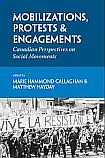
It wasn't always this way in the province. In the next week or so, Fernwood Publishing will be releasing a collection of essays co-edited by Marie Hammond-Callaghan and myself about social movements in Canada. My own contribution to the collection is an article entitled "Mad at Hatfield's Tea Party: Federalism and the Fight for French Immersion in Sackville, New Brunswick, 1973-1982". While I was teaching at Mount Allison University, I had occasion to conduct some research into the history of French immersion in New Brunswick. Back in the late 1970s and early 1980s, parents in New Brunswick were actively trying to expand the French immersion program, generally with the support of Richard Hatfield's government.

The program grew in popularity to the point where demand far outstripped class space. Indeed by 1980, the number of applicants for grade one immersion in Sackville, New Brunswick was twice that of the number of available spaces in the single class. Faced with the prospect of two dozen children not being allowed entrance into the program, parents in the community launched a three-pronged lobby effort aimed at the school board, the provincial government, and the federal government in order to expand the French immersion program. Ultimately, the Hatfield government decided to revise its education program to mandate the creation of French immersion classes where sufficient demand existed.

Unfortunately, back in the early 1980s, it was the local school boards that were reluctant to expand immersion program offerings, while the federal government was wholeheartedly in favour of promoting official languages, and the provincial government was generally sympathetic. Parents are facing an uphill battle in the current climate, as it is the provincial government which has financial control and curriculum-setting powers, and yet seems unwilling to listen to the advice of pedagogical experts, or even the parents who support this form of education for their children. I understand that parents and advocacy groups intend to fight this decision, and I hope that they are ultimately successful in reversing this ill-advised policy.

Labels: , ,

Recommend this Post

Friday, March 14, 2008

French immersion and Core French in New Brunswick to be slashed

I'm shocked over the full extent of cuts to French-as-a-second-language instruction announced in New Brunswick today. Not only is the province doing away with its early immersion programs that commenced in Grade 1 (which had been hinted at earlier), but it's also slashing core French-as-a-second-language as well, delaying any introduction to the French language until Grade 5. Understandably, the official opposition and parents groups such as Canadian Parents for French are outraged. Canadian Parents for French New Brunswick has some very interesting and troubling observations about the report that led to this decision here.

I am gobsmacked by this decision. Virtually all of the studies that I've read on second-language acquisition stress the idea that it is best to start children as early as possible on their second language. But it appears that someone has managed to put a study on Education Minister Kelly Lamrock's desk that justifies his decision. I can't help but wonder if this is a cost-cutting measure disguised as a pedagogic decision. Itinerant FSL specialists who teach the core French courses represent an additional cost for school boards, who will now only have to pay for the regular teachers to give instruction in art and phys-ed. French immersion requires small class sizes, which again, can be expensive.

The stated rationale for the decision - that 91% of students who began French immersion had dropped out by the end of high school - doesn't necessarily strike me as a good reason to switch from early immersion to late immersion that starts in Grade 6. Rather, it suggests that there are more systemic problems with the manner in which the curriculum is structured. Indeed, one could just as easily make the case that large numbers of students drop math and science once they fulfill their high school requirements, and yet we aren't seeing proposals to remedy this situation by starting students in intensive math at the Grade 5 level.

There is something rotten in the province of New Brunswick, and it smacks of double-speak. Eliminating early exposure to the French language is highly unlikely to produce a province in which 70% of high school graduates speak fluent French. Quebec, after years of prohibiting English-as-a-second-language classes for francophone students prior to Grade 4, has finally returned to a system of starting second language classes in Grade 1. Why, one must ask, is New Brunswick heading in the other direction?

Update: It wasn't always like this in New Brunswick. For a bit of history on how the New Brunswick government once viewed French immersion, I've added this post.

Labels: , , ,

Recommend this Post